Why most gutter faults are repairs, not replacements
Many gutter problems look worse than they are. For example, a drip at a joint or a gutter that droops at one end seems like a reason to rip everything out. In fact, a lot of these faults come down to one small part that has failed.
That is good news for your budget. Repairing one joint or a few brackets often costs less than fitting a whole new run. However, you need to find the real cause first, or the fault will come back.
This guide covers the common faults and the repairs that fit each one. It also explains when replacement does make more sense. If you want to know what a full replacement costs, see our guide to gutter replacement costs in the UK.
Start by finding the real fault
Before you repair anything, work out what is actually wrong. A blocked gutter can look like a leaking gutter. Water spills over the edge, runs down the wall, and seems to come from a joint.
So, first clear the gutter and watch it in rain. If the water now flows to the downpipe, you had a blockage, not a defect. Our article on why gutters overflow explains how to tell the two apart.
Regular cleaning also prevents many of these faults. Our guide on how often to clean your gutters sets out a sensible routine. In addition, the autumn gutter cleaning guide shows why leaf fall is a key time of year.
A simple checklist before you repair
A short check can save a wasted trip up the ladder. Look at the whole run from the ground first, ideally during or just after rain. Note where water drips, where it spills and where the gutter has dropped.
Then write down what you see. For example, mark each leaking joint, each loose bracket and each stained patch of wall. A list like this helps you decide between a small repair and a larger job. It also helps if you ask someone else to quote, because you can describe the faults clearly.
Repairing a leaking joint
Joints are a common leak point on guttering. A UK gutter supplier lists a deteriorated joint seal and a cracked or split section as frequent causes of leaks. Loose brackets and blockages add to the list.
Clean the joint first
Grit and silt can sit inside a joint and stop the seal from closing. As a result, a joint can drip even when the seal is fine. Unclip the joint, clean the parts, and fit them back together.
Check the seal
The rubber seal inside a union can crack or deform. The same supplier says that a cracked or deformed seal should be replaced, not sealed over. If the seal is sound, a thin bead of gutter sealant around the inside of the joint before you reassemble it can help. Our gutter sealant guide explains the main sealant types and how to use them.
Fixing a sagging or sloping gutter
Water should run along the gutter to the downpipe. If the gutter sags, water sits in the low spot and spills over.
Why gutters sag
Sagging often comes from loose brackets, or from a fascia board that has gone soft behind them. The supplier’s guide says loose fascia brackets or a rotted fascia can let a gutter drop. Therefore, you should press the board with a screwdriver tip before you touch the gutter.
The repair
To correct the slope, loosen the brackets, lift the gutter to its proper line, and tighten them again. If the board is soft or rotten, it needs replacing first, because new screws will not hold in rotten timber. That is a job for a carpenter or a roofline specialist, and it sits alongside any gutter work.
When a section is cracked or split
However, cracks are a different matter. A UK supplier’s guide says that no amount of sealant will give a reliable long-term fix for a cracked or split section. In this case, the answer is to replace that length of gutter.
Replacing one section is still a repair, not a full replacement. Instead, you swap the damaged length and keep the rest. For plastic systems, this can mean a new section and new joints at each end.
Old metal guttering needs more care. Ask a professional to look at it before you start.
When replacement is the better choice
Repair has limits. For instance, if the plastic has gone brittle, if faults appear along the whole run, or if the fascia is rotten along its length, then patching becomes a poor use of money. Each repair costs money, and new faults may follow.
As a rough test, ask three questions:
- Is the fault in one place or in many places?
- Is the material still sound?
- Is the fascia behind the gutter sound?
If the answers are one place, yes and yes, repair is usually the right call. If not, it is worth getting a price for replacement, so you can compare.
Working safely on your own gutters
Most gutter repairs happen at height. Guidance produced by the Ladder Association with the HSE says ladders can be used for low-risk, short-duration work. It adds that a task needing more than 30 minutes at a time on a ladder calls for other equipment.
That is worth remembering. A job that involves lifting a gutter, holding it and fixing brackets is awkward on a ladder. Consequently, some homeowners prefer to hand repairs to a professional.
Getting help in mid-Kent
We serve Maidstone and mid-Kent, and our gutter repair service covers joints, brackets and sagging runs. We can also clear the gutters first with our gutter cleaning service, so that you see the true state of the system.
For homes in the county town, see our page on gutter cleaning in Maidstone. Also, we cover gutter cleaning in West Malling and gutter cleaning in Tonbridge.
Then, once you know what is wrong, a quote is the next step. Send us a few details and we will talk you through the options, with no obligation.
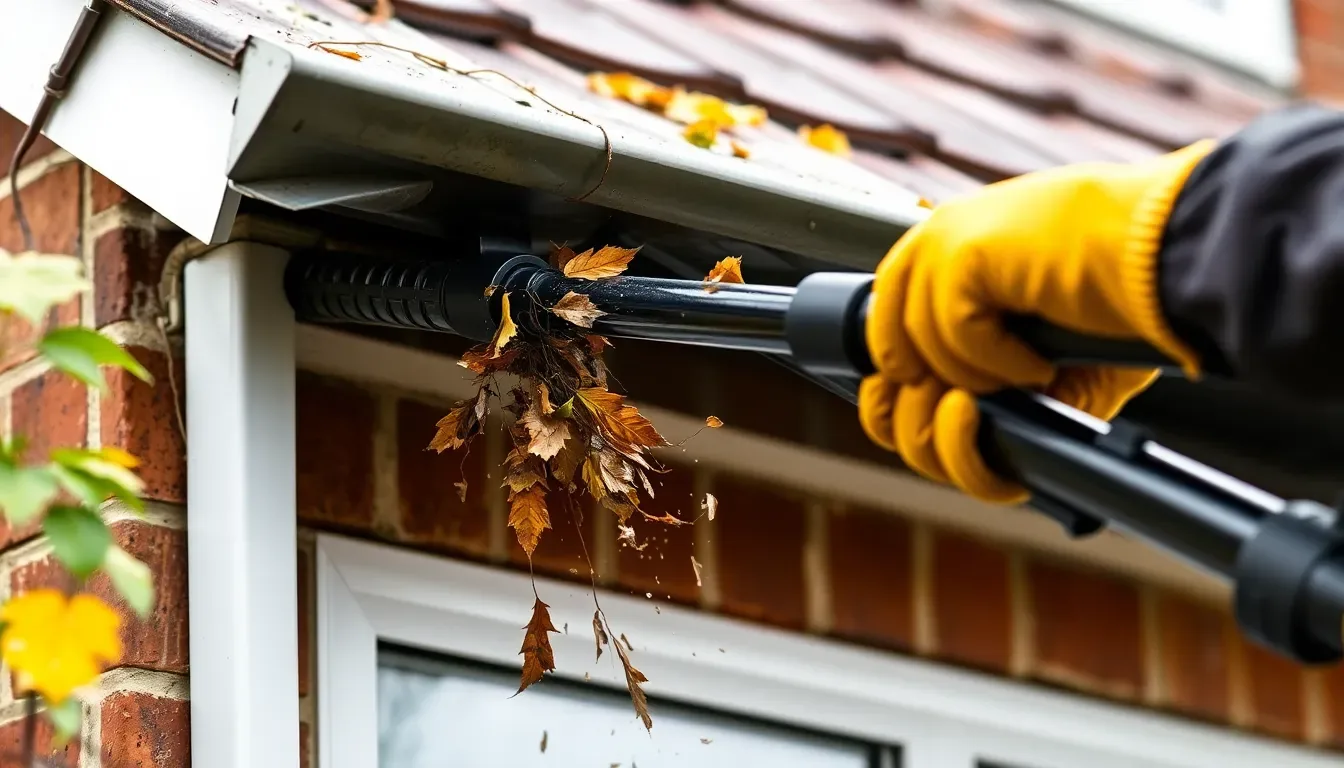
Blocked gutters cause overflow, so keeping them clear helps. A ground-based vacuum system is one way to do that, and leaf guards can help in some homes. Our post on whether gutter guards are worth it weighs up the pros and cons.
Tags:
Related Articles
Gutter Cleaning for Landlords: What the Law Says
Are landlords responsible for gutters? See what the Landlord and Tenant Act 1985 s.11 and GOV.UK say about gutters, and how to plan upkeep for rental homes.
Tips & AdviceAre Gutter Guards Worth It? An Honest Look for Kent Homes
Do gutter guards stop you cleaning your gutters? Learn what leaf guards do well, where they fall short, and which homes gain the most before you decide to buy.