A simple rule for gutter cleaning frequency
There is no single answer that suits every house. However, a good starting point is one thorough clean a year, ideally after the main leaf fall. Then you can add a second clean if your home needs it.
That second clean matters most for homes under or near big trees. For example, moss, wind-blown debris and winter litter build up in the months after the autumn clean. So a spring visit clears them before summer rain arrives.
This guide helps you work out which pattern fits your home. It is written for Maidstone and mid-Kent, but the logic holds for any UK house.
What changes the answer
Several things push the schedule up or down. Trees come first, because leaves are the biggest source of debris. A house with an oak or a beech beside it will clog far faster than one in an open street.
Roof type matters too. For example, a roof with moss on its tiles drops moss into the gutter all year round. Shade has an effect as well, since damp sides of the house grow algae and moss more quickly.
Finally, the gutter itself plays a part. A run with a poor fall holds water, so silt settles in it and plants take root. In addition, narrow or old gutters block more easily than wide modern ones. Our guide to why gutters overflow goes through these causes in more detail.
Tree cover
Trees are the clearest sign. For example, if branches overhang the roof, expect a heavy autumn load. However, if trees stand further away, wind still carries leaves, but the load is lighter.
Moss and shade
Moss grows where the roof stays damp. As a result, shaded slopes shed more moss into the gutter. Over time that moss forms a mat that holds water and blocks outlets.
Age and type of gutter
Old cast-iron gutters and modern uPVC behave differently. For instance, cast iron is heavy and relies on sealed joints, so a leak can look like an overflow. In contrast, plastic is lighter, but it can crack with age and sunlight.
The gutter calendar
Different debris arrives at different times of year. The table below shows what usually fills a gutter, and why each season matters.
| Season | Typical debris | Why it matters |
|---|---|---|
| Autumn | Leaves, twigs, seed pods | Wet leaves pack down and seal the gutter, so water cannot drain. |
| Winter | Wind-blown litter, broken twigs | Storms drop debris and can loosen brackets or joints. |
| Spring | Moss, algae, pollen | Damp weather feeds moss, and pollen can clog downpipes. |
| Summer | Storm debris, nesting material | The load is usually low, but a heavy storm can leave a blockage. |
Also, outside the usual schedule, check after a big storm. A quick look from the ground can reveal a new blockage before it causes an overflow.
Warning signs that a clean is overdue
You do not have to wait for the calendar. Look out for these signs:
- Water spilling over the front or back edge during rain.
- Damp patches or staining on outside walls, especially below the gutter.
- Moss, weeds or algae growing at gutter level.
- Gutters that sag, or brackets that look loose.
If you spot any of these, arrange a clean rather than wait for the next season. Otherwise, leaving it can turn a simple job into a repair. In that case, our gutter repair service can look at the fault once the run is clear.
Does the type of home change things?
Bungalows and single-storey homes. The gutter line is easy to see, so early build-up is simple to spot. However, the same debris falls on the roof, so the yearly routine still applies.
Two- and three-storey homes. The run is higher and harder to check. Because you cannot see inside it, an annual clean is the safer habit, even when nothing looks wrong.
Terraces and flats. Shared walls and shared drainage make a blockage affect more than one household. For this reason, talk to your neighbours or your managing agent. Our guide to gutter cleaning for landlords explains who is responsible in rented homes.
Linking the schedule to the season
Autumn is the busiest period for most homes. So, for a full walk-through of timing and what to expect, read our autumn gutter cleaning guide. It also covers how to judge when the leaves are down.
Gutter guards are another topic that comes up here. Some people hope that guards will cut the schedule to nothing. In practice they reduce the work but do not remove it, as we explain in our post on gutter guards in Kent.
Cost, method and replacement
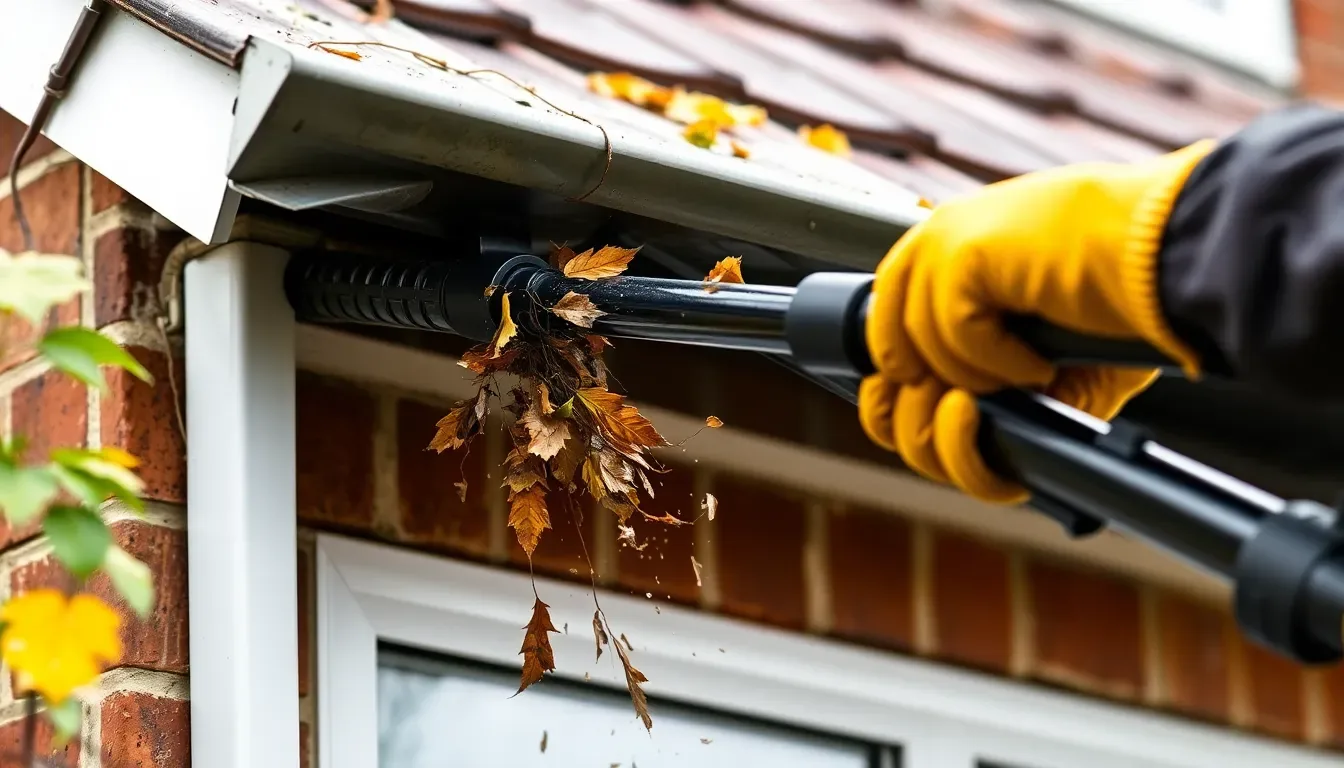
Many people ask what a clean costs, and the honest answer is that it depends on the home. Our guide to gutter cleaning cost in Maidstone explains what changes the price. Also, if you are curious about the method, see what a gutter vac is.
Sometimes a gutter is past saving, and a clean cannot fix it. If that happens, our guide to gutter replacement cost sets out what replacement involves.
Keeping the roofline clean too
Gutters are only part of the picture. The fascia boards behind them also gather algae, and green staining spreads when nobody treats it. So it makes sense to look at the boards when you book a clean. Our fascia and soffit cleaning service can be added to the same visit.
Where we work
We serve Maidstone and mid-Kent. If you live in the town, see our page on gutter cleaning in Maidstone. Further out we also cover gutter cleaning in Tonbridge, gutter cleaning in Ashford and gutter cleaning in Sevenoaks.
Next steps
Our gutter cleaning service uses a ground-based vacuum system, and we clear downpipes as part of a clean. Our hours are Monday to Saturday, 8am to 6pm. A quote is free and carries no obligation, so use the contact form to tell us about your home.
Tags:
Related Articles
Gutter Cleaning for Landlords: What the Law Says
Are landlords responsible for gutters? See what the Landlord and Tenant Act 1985 s.11 and GOV.UK say about gutters, and how to plan upkeep for rental homes.
Tips & AdviceAre Gutter Guards Worth It? An Honest Look for Kent Homes
Do gutter guards stop you cleaning your gutters? Learn what leaf guards do well, where they fall short, and which homes gain the most before you decide to buy.