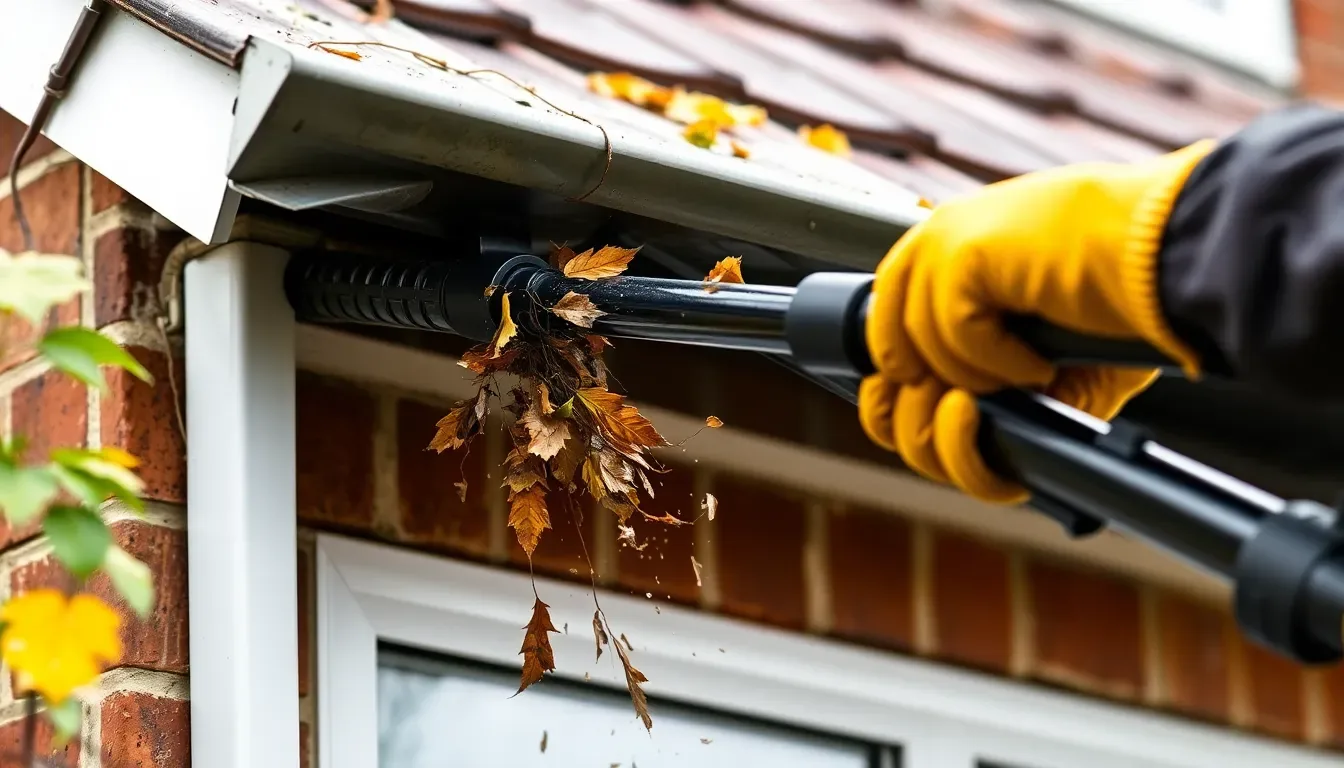
What a gutter vac is
A gutter vac is a vacuum cleaner made to clear gutters. A wet and dry vacuum links to long poles. At the end of the poles sits a cleaning head that goes into the gutter.
In use, the operator stands on the ground. Then the head moves along the gutter, and the vacuum pulls leaves, silt and moss into a container. That is the whole idea: suck the mess out instead of reaching up and scooping it by hand.
People search for “gutter vac” because they have seen the poles or heard the term. So, this guide explains the method in plain words. It also says what the method can and cannot do, because every method has limits.
How a gutter vacuum works
The parts are simple, so let us go through them one by one.
The vacuum
First, the vacuum is a wet and dry machine. It copes with damp leaves and silt as well as dry debris, which is what you find in a gutter. Debris then travels up the hose and into the container.
The poles
The poles lock together to reach the gutter. For example, a 2014 trade-press article about one system said the poles had a locking system that keeps the tube diameter the same at the joins. It said this stops blockages inside the tube. The same article said carbon-fibre tubes make the system much lighter.
The cleaning head and camera
Finally, the head sits at the top of the poles and fits into the gutter. In addition, some systems have a camera on the head. The same article described a closed-circuit camera on the cleaning head of one system, so the operator can see what the head is doing.
Not every kit is the same
However, kits vary. Poles, suction and cameras differ between them, so we make no claims about any particular model in this article.
Also, the claims made for a system come from its seller. For that reason, then, treat any boast about reach or suction power with care, and ask to see what a system does in practice before you rely on it.
Why people use vacuum systems
The main reason is working from the ground, because a ladder always carries some risk. Guidance produced by the Ladder Association with the HSE says ladders can be used when the work is low risk and short in duration. It also says tasks that need more than 30 minutes at a time on a ladder call for other equipment.
Also, gutter clearing can be awkward on a ladder, because you hold a bucket or bag and reach sideways. Consequently, a method that keeps your feet on the ground is attractive. A vacuum also collects the debris as it goes, so it is not dropped to the ground below.
What a gutter vac cannot do
No method does everything, so being honest about the limits helps you choose well. Here are the main ones.
Reach
However, poles only go so far. Very tall buildings, or gutters behind obstacles, can be out of reach. In that case another way of working at height may be needed.
Hard or compacted debris
Next, debris that has dried into a solid mat can be tough to pull out. Moss that has grown into the gutter can also take extra effort. As a result, gutters that have gone years without care can take more work.
Repairs
A vacuum clears debris. It does not fix a leaking joint or a sagging run. So, see our guide to repairing guttering without replacing it for those faults, and our gutter sealant guide for joint leaks.
Gutter vac, hand clearing or pressure washing?
There are three common ways to clear a gutter. Each one has a place, but they work in different ways, so it helps to compare them.
Clearing by hand
First, hand clearing means reaching into the gutter and scooping out the debris. It gives you a close look at the gutter. That said, it usually means working at height, and you need somewhere safe to put the waste.
Pressure washing
Second, a pressure washer pushes water along the gutter. This can shift loose debris, but it also moves dirty water and silt around. As a result, the mess can land on walls, windows and the ground below. A vacuum takes the debris away instead.
Using a vacuum
Third, a vacuum pulls the debris out and holds it in a container. That makes disposal simple. Also, it keeps the work at ground level.
Questions to ask before you book a cleaner
Whatever method a cleaner uses, a few questions help you compare quotes. However, you do not need to be an expert to ask them.
- Will the quote include clearing the downpipes?
- Does the quote say how the waste is removed?
- Does the quote cover repairs, or only cleaning?
A clear answer to each one is a good sign, so use these as a starting point. Also, ask what is included in writing, so that two quotes are easy to compare.
Our method
Our gutter cleaning service uses a ground-based vacuum system. We serve Maidstone and mid-Kent. Because blocked downpipes cause overflow too, we also clear downpipes as part of a clean.
Once the gutters are clear, we can look at the boards behind them. For example, our fascia and soffit cleaning service cleans the boards behind the gutters. Also, if the clean shows a fault, our gutter repair service can deal with it.
For local detail, read about gutter cleaning in Maidstone on its own page. Also, we cover gutter cleaning in Ashford and gutter cleaning in West Malling too.
Related reading
For help with costs, see our post on gutter cleaning costs in Maidstone. If you own a rental, then read about gutter cleaning for landlords. Finally, when a run is past saving, our guide to gutter replacement costs sets out what replacement involves.
Leaf fall is a good moment to clear gutters, so our autumn gutter cleaning guide explains why.
If you would like your gutters cleared, ask for a free quote. There is no obligation.
Tags:
Related Articles
Gutter Cleaning for Landlords: What the Law Says
Are landlords responsible for gutters? See what the Landlord and Tenant Act 1985 s.11 and GOV.UK say about gutters, and how to plan upkeep for rental homes.
Tips & AdviceAre Gutter Guards Worth It? An Honest Look for Kent Homes
Do gutter guards stop you cleaning your gutters? Learn what leaf guards do well, where they fall short, and which homes gain the most before you decide to buy.