Why gutters matter to landlords
Gutters are easy to forget in a rental home, because nobody looks at them until water pours down a wall. Tenants may not notice a blocked gutter. As a result, a problem can grow before anyone reports it.
For a landlord, that makes gutters a quiet risk. For example, a blocked run can lead to overflow, wet walls and a repair bill. So, it helps to know where the law places the duty, and how to plan upkeep.
This post sets out what the law and GOV.UK say about gutters in rented homes in England. We are gutter cleaners, not lawyers, so this is general information and not legal advice. For your own tenancy, check the agreement and speak to a legal adviser.
What section 11 says about gutters
The Landlord and Tenant Act 1985 sets out repairing duties for landlords of some dwellings. Section 11(1)(a) says the lessor must:
“to keep in repair the structure and exterior of the dwelling-house (including drains, gutters and external pipes)”
The words “drains, gutters and external pipes” are in the text.
The standard of repair
However, section 11(3) adds a point on standards. It says that regard shall be had to the age, character and prospective life of the dwelling-house, and to the locality. So, the standard depends on the home in front of you.
Which tenancies it covers
Section 11 does not cover every tenancy. Section 13 says it applies to a lease of a dwelling-house granted on or after 24 October 1961 for a term of less than seven years. However, the Act has been amended, including by the Renters’ Rights Act 2025, so the exact rules have changed in places.
For that reason, read the current text on legislation.gov.uk for your tenancy. Wales also has its own rules. Section 13 says section 11 does not apply to a Welsh dwelling-house that is subject to an occupation contract under the Renting Homes (Wales) Act 2016.
What GOV.UK says
GOV.UK has a page called “Private renting: Repairs”. It says a private tenant’s landlord is always responsible for repairs to the property’s structure and exterior. It also says the landlord is usually responsible for repairing common areas, for example staircases in blocks of flats.
Furthermore, the same page says tenants cannot be forced to do repairs that are their landlord’s responsibility. That matters for gutters, which sit on the outside of the building.
Flats and shared buildings
Many rented homes are flats, and gutters on a block are often shared. Section 11(1A) deals with leases of a dwelling that forms part of a building. Read the section itself for the detail, because the wording is specific.
Similarly, GOV.UK says the landlord is usually responsible for common areas. That is a general statement, not a rule for every case. So, if you let a flat, check who controls the roof and its gutters before you book any work.
What to check in your own tenancy
Every tenancy is different, because the dates and terms matter. A short checklist helps you ask the right questions.
- What type of tenancy is it, and when was it granted?
- How long is the term, given the seven-year point in section 13?
- Does the agreement say anything about gutters or outside upkeep?
- Who controls the roof if the home is a flat?
If the answers are unclear, a legal adviser can read the documents and the current Act for you. We cannot do that, because we would not want to guess.
Repair versus routine upkeep
However, here the law gets less clear. The Act talks about keeping something “in repair”. The wording does not make clear whether routine clearing of leaves and silt counts as repair or as upkeep. We cannot tell you which side of the line your tenancy falls on.
However, the practical point is simple. A blocked gutter leads to overflow, and overflow can cause the damage that a landlord must then repair. Clearing the gutters before that happens is often the simpler route. Our post on why gutters overflow explains how a blockage turns into damage.
Planning upkeep across rental homes
A simple routine makes gutters easy to manage. Treat them like any other regular check.
Pick a schedule
First, decide how often each property needs attention. Our guide on how often to clean your gutters explains what affects the answer. Trees close to the house, for example, can mean more frequent visits. The autumn gutter cleaning guide covers the leaf-fall season.
Keep your own notes
Next, keep a note of when each property was last cleaned. Your own list of dates and quotes helps you plan. It also gives you a clear history of each property.
Agree who books the work
If a letting agent manages the property, find out who orders contractors. Arrangements vary from one landlord to the next. Either way, a clear plan avoids delays when a gutter fails in bad weather.
Also, tell your tenants when a visit is due. Gutter work happens outside, but a short notice avoids surprises. It also gives them a chance to mention any damp or drips they have seen.
Deal with faults promptly
Then act on faults. A leaking joint or a loose bracket can get worse over time. Our guide to repairing guttering without replacing it covers the common fixes. If you are weighing up repair against a new run, see our gutter sealant guide and our post on gutter replacement costs.
How we can help
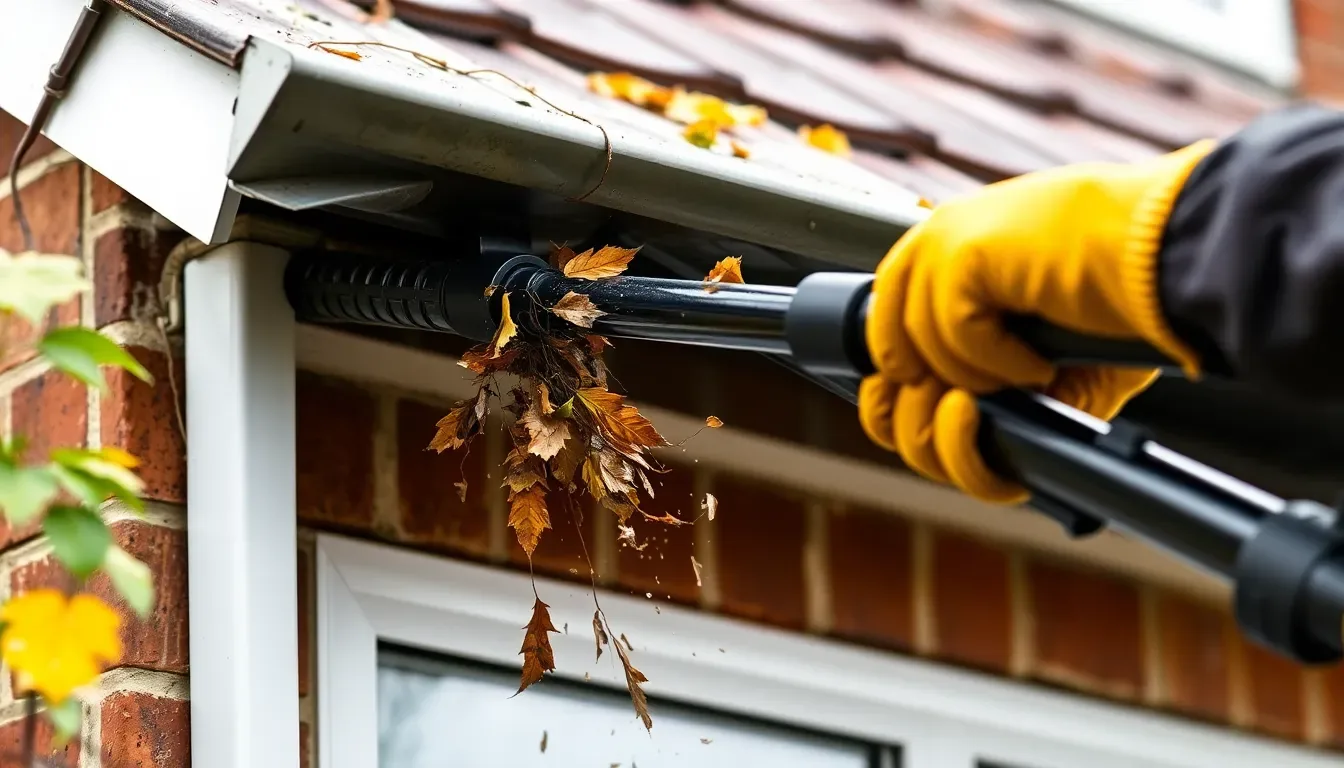
We serve Maidstone and mid-Kent. Our gutter cleaning service clears gutters and downpipes from the ground with a vacuum system.
Our fascia and soffit cleaning service cleans the boards behind the gutters, so you can see their condition. Also, each town has its own page. For example, see our pages on gutter cleaning in Maidstone, gutter cleaning in Sittingbourne and gutter cleaning in Rochester.
If you look after one rental or several, you can ask for a free quote. There is no obligation, and we will explain what we would do.
Tags:
Related Articles
Are Gutter Guards Worth It? An Honest Look for Kent Homes
Do gutter guards stop you cleaning your gutters? Learn what leaf guards do well, where they fall short, and which homes gain the most before you decide to buy.
Tips & AdviceWhat Is a Gutter Vac and How Does It Work?
A gutter vac is a vacuum on long poles that clears gutters from the ground. Learn how it works, what it can and cannot do, and when a ladder is still needed.